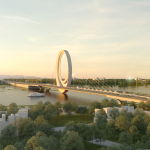
Cần Giờ – a land with over 300 years of history tied to Saigon (Ho Chi Minh City), Vietnam, and famous for its distinctive mangrove forests – will soon be accessible without ferries thanks to the Cần Giờ Bridge, a cable-stayed bridge spanning the Soài Rạp River, a tributary of the Saigon River.
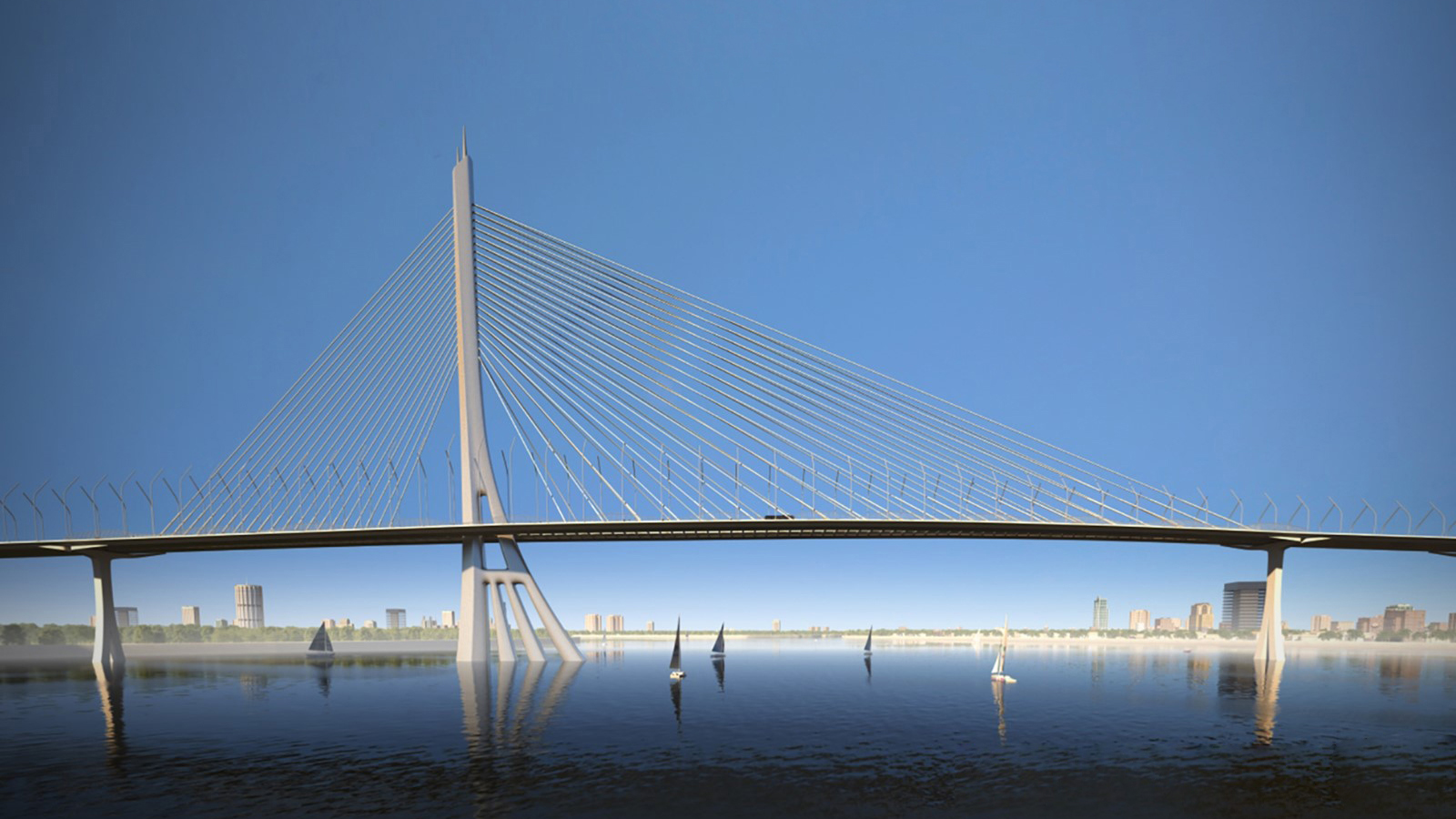
Located near the estuary, the main span of Cần Giờ Bridge reaches nearly 600 meters with a clearance of over 350 meters, allowing vessels up to 55 meters high to pass through. With a width of 24.5–30 meters and six traffic lanes, the bridge ranks among large-scale projects of international stature.
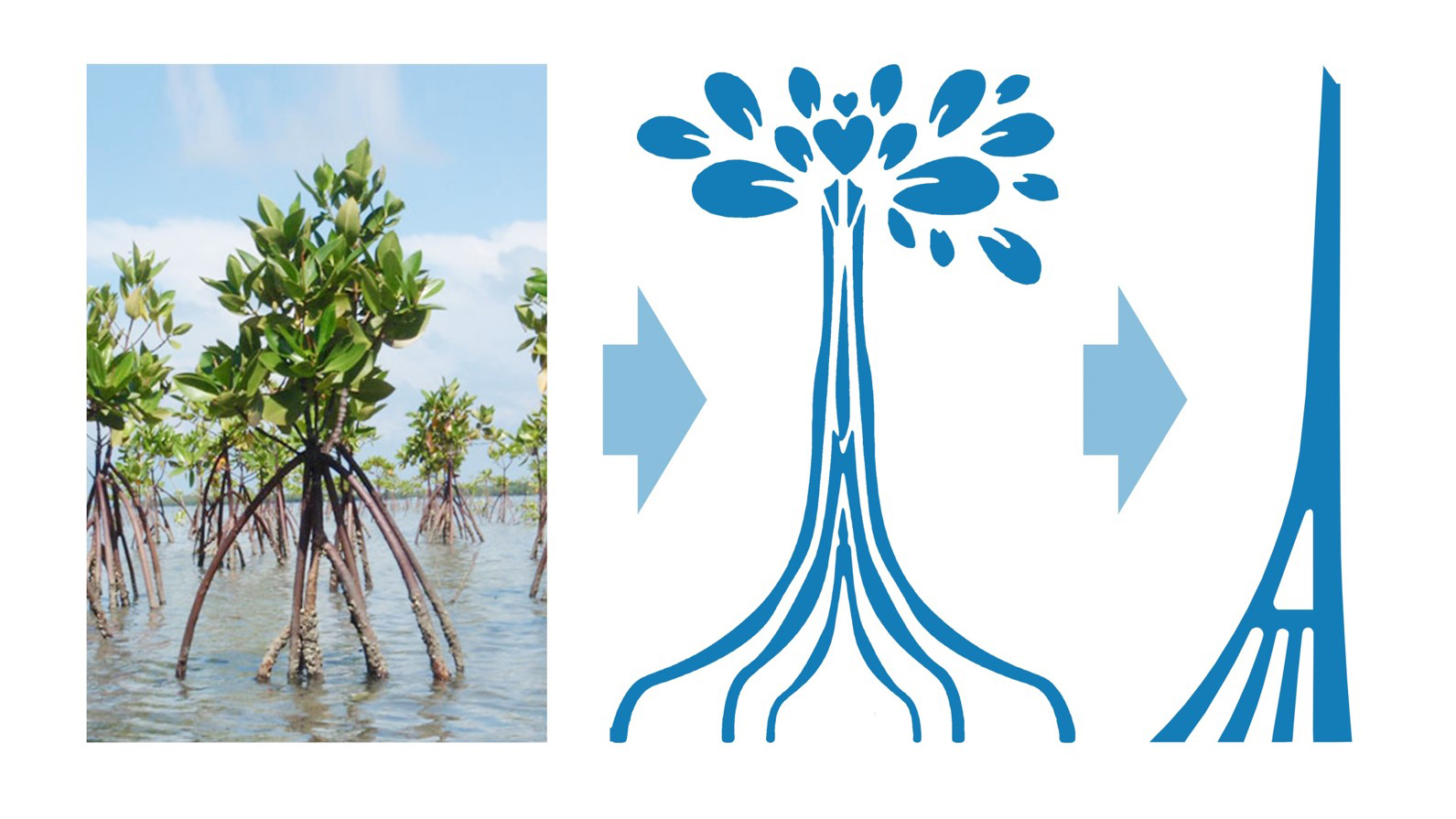
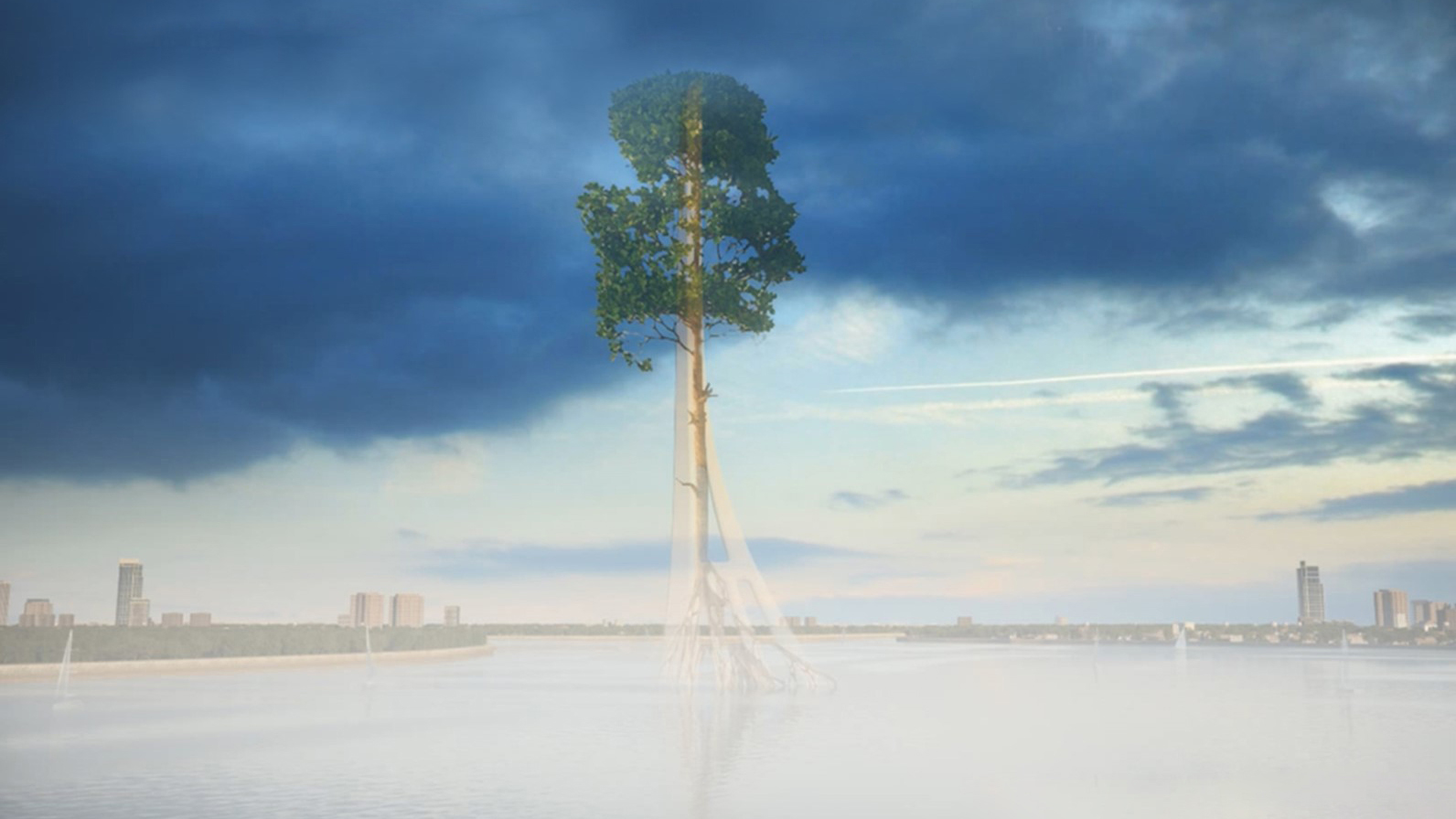
The design is inspired by the mangrove tree (Đước) – the immortal symbol of the Cần Giờ mangrove forest – with its foundation system resembling resilient roots that withstand waves and tides. The graceful silhouette of Cần Giờ Bridge harmonizes with the four towers of Bình Khánh and Phước Khánh bridges, together forming a symbolic landscape reminiscent of the five sacred mountains of Eastern philosophy. The five towers correspond to the “Sinh” element in geomancy, with Cần Giờ Bridge’s tallest tower representing Wood in the five elements (Metal, Water, Wood, Fire, Earth), symbolizing vitality and growth.
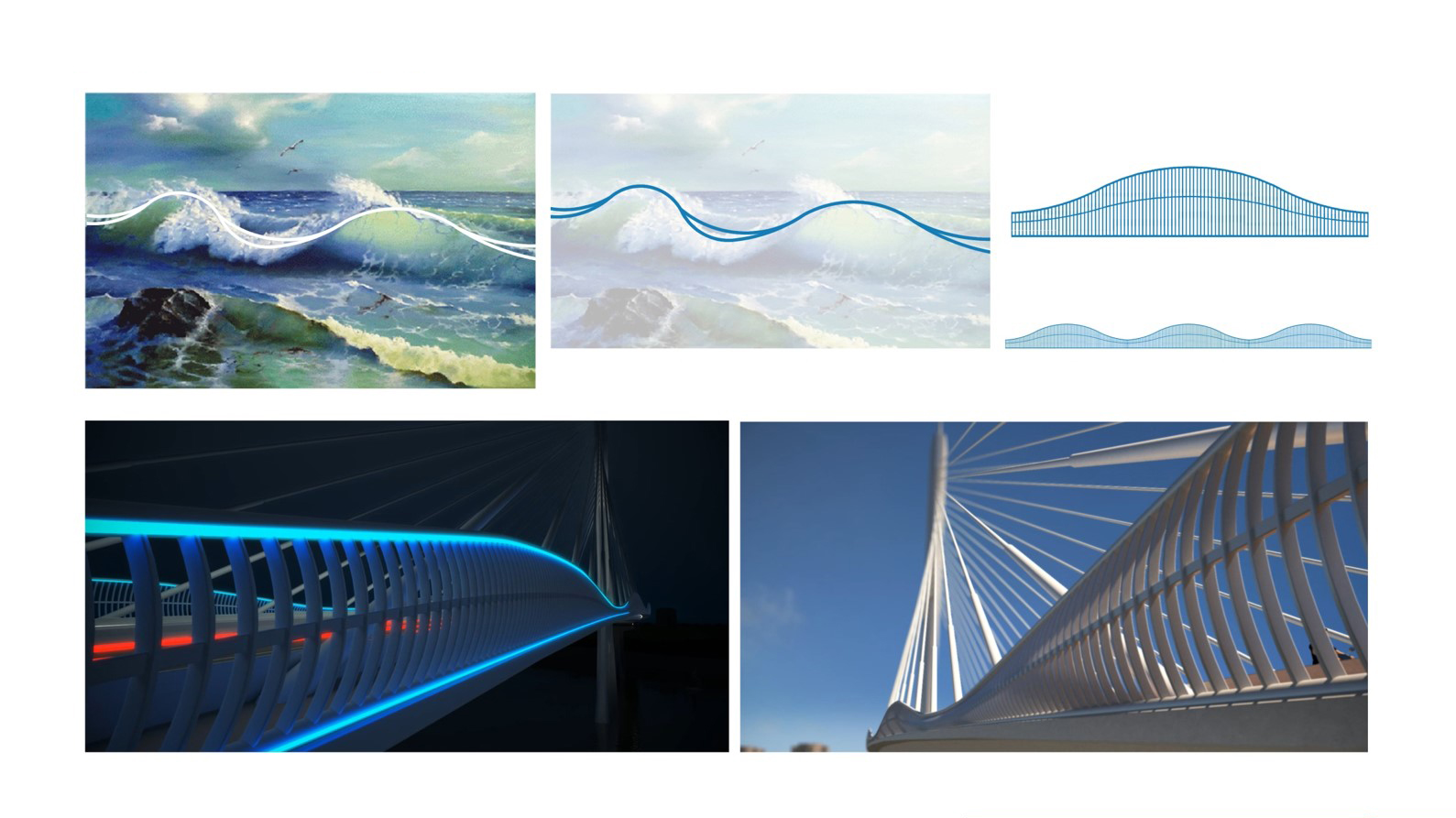
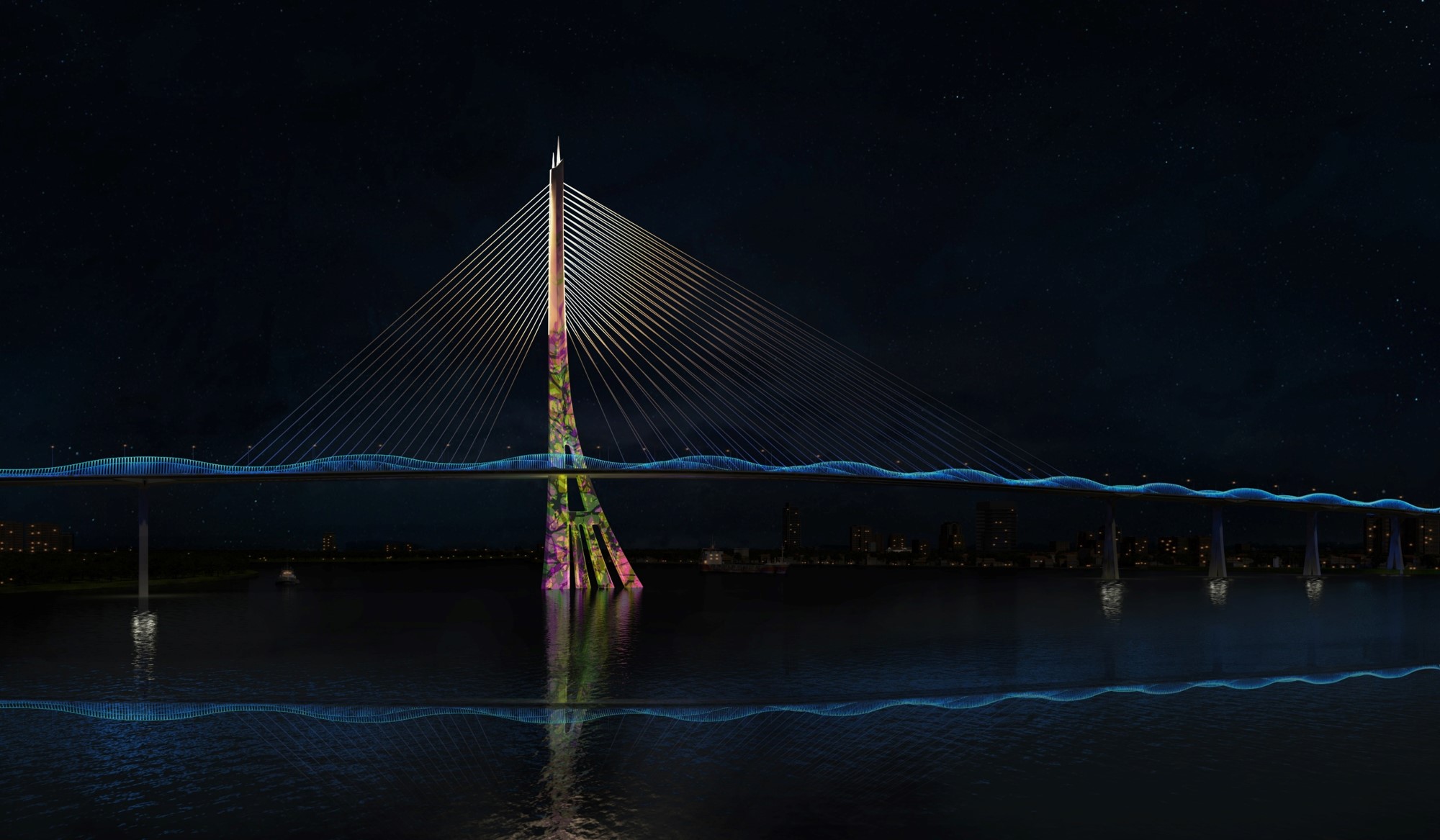
The bridge features impressive lighting inspired by ancient Asian timekeeping, and double-layer wave-like railings that serve both aesthetic and wind-shielding functions for motorcyclists. The entrance acts as a gateway to the UNESCO-protected Biosphere Reserve, while the bridge also integrates an observation deck and elevators to the tower tops, offering panoramic views: eastward to Đồng Nai, westward to Long An and Nhà Bè, and southward to the vast Cần Giờ Sea merging into the East Sea.
With a majestic height of 230 meters and a north–south orientation, one-third of the upper cables are designed with special color variations to capture sunlight, creating a rainbow effect at sunrise and sunset. Once completed, the bridge, alongside the 108-story New Cần Giờ Tower, will become an iconic landmark for major events such as fireworks and light shows.
The “Architectural Design Competition for Cần Giờ Bridge – Ho Chi Minh City” was held on July 3, 2018, inviting reputable companies and professional design units with strong expertise in bridge and transportation engineering. Outperforming 17 proposals from five organizations, the winning design exceeded the second-place entry by 89 points on the official scoring scale and was unanimously selected by the jury for implementation.
The Cần Giờ Bridge design fulfills three key aspirations:
- Toward Happiness – developing from a humble, familiar symbol that resonates with designers, builders, and users alike.
- Toward Harmony – balancing yin and yang, curves and lines, sunlight and water, sound and lighting, flat and inclined surfaces, colors in moderation.
- Toward Simplicity – a design that feels as if it were “designed without design.”
It can be said that the design of Can Gio Bridge has met 3 goals: towards happiness (developing the idea from a simple symbol, close to both the designer, the constructor and the user); Aiming for harmony (yin and yang, round and straight, sun, wind and water, sound and lighting, flat and slanted, colors, all moderate and consistent) and minimalism – design as no design.